Korea’s Volatility Shock: How AI Stock Weakness, Leveraged ETFs, and Fed Policy Are Rewiring Asian Markets
Keywords: Korea stock market, Kospi volatility, AI equities, leveraged ETFs, Samsung Electronics, SK Hynix, Federal Reserve, bond yields, capital expenditure, market risk
Introduction
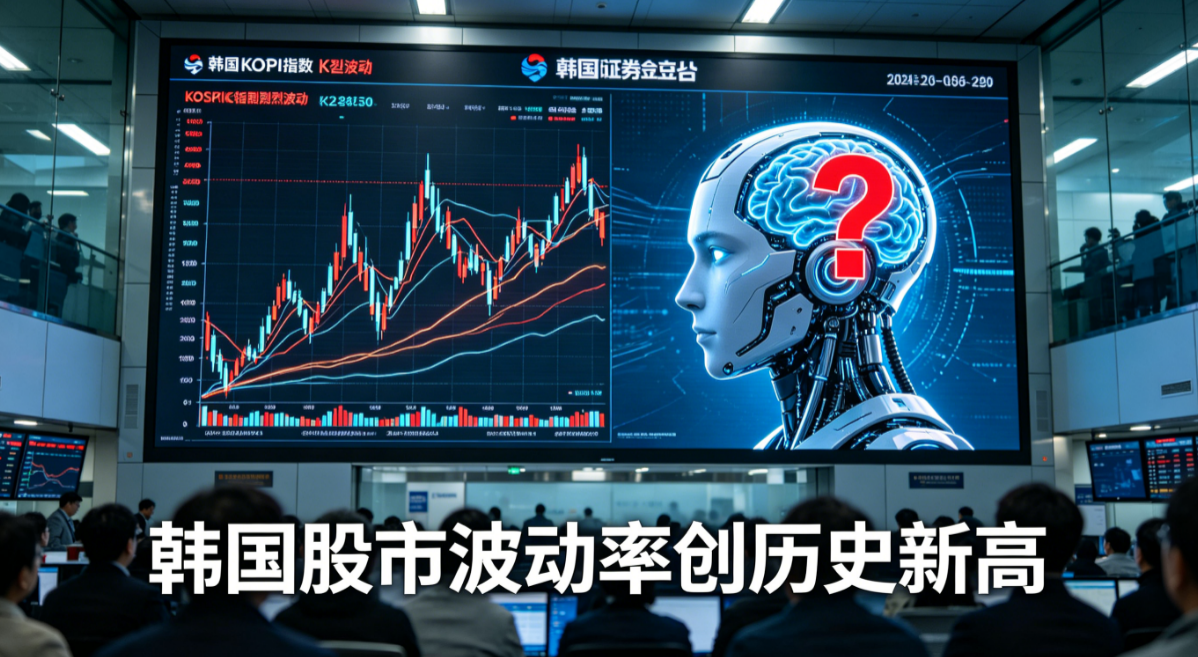
Asian equities opened sharply lower on Wednesday, but the session quickly turned into a textbook example of how fragile sentiment can be when technology earnings expectations, interest-rate concerns, and retail leverage collide. Nowhere was that fragility more visible than in South Korea, where the Kospi swung from a 1.5% intraday decline to a 3.9% gain by the close, while volatility in the benchmark index reached a record high.
The market’s turbulence was not driven by a single piece of macro data or a fresh geopolitical shock. Instead, it reflected a deeper structural issue: investors are increasingly questioning whether the extraordinary valuation support behind artificial intelligence stocks can survive a more restrictive rate environment. In Korea, where chipmakers Samsung Electronics and SK Hynix dominate index performance, the selloff in U.S. AI names spilled directly into local trading. At the same time, the rapid growth of single-stock leveraged ETFs amplified every move, turning normal price discovery into a feedback loop of forced buying and selling.
What happened in Korea this week is important for more than just local traders. It reveals how global tech exposure, U.S. monetary policy, and retail leverage are now tightly connected across markets.
AI Earnings Expectations Meet Rate-Driven Reality
The immediate trigger for the latest decline in Asian tech sentiment was the weakness in U.S. AI-related stocks. On Tuesday, Nvidia fell more than 4%, while Intel dropped 6.1% and Micron Technology plunged 13.2%. These moves were not just isolated reactions to a bad session; they reflected a broader reassessment of how much capital is being allocated to AI infrastructure and how quickly that spending can translate into earnings.
The core concern is valuation durability. AI stocks have benefited from a powerful narrative: massive demand for chips, data center buildouts, and cloud expansion will sustain revenue growth for years. But the market is now asking a harder question: what happens if the cost of capital rises just as companies are forced to spend more aggressively on compute infrastructure?
That question matters because AI investment is capital intensive. Semiconductor companies, cloud platforms, and related equipment suppliers must commit huge sums up front, often before the revenue payoff is fully visible. When discount rates rise, future cash flows are worth less today. At the same time, financing those projects becomes more expensive. This double pressure is particularly painful for companies whose market capitalization already embeds aggressive growth assumptions.
Korea as the Center of the Shock
South Korea is unusually sensitive to this dynamic because the Kospi is heavily weighted toward chipmakers. Samsung Electronics and SK Hynix are not just major constituents; they are the market’s engines. When global investors rotate out of AI and semiconductors, Korea feels the impact faster and more violently than many other Asian markets.
That was visible in Wednesday’s trading. Samsung Electronics fell as much as 3.2% intraday before closing more than 8% higher, while SK Hynix dropped 4.5% at one point and ended up 1%. This kind of reversal signals not confidence, but instability. Traders were forced to digest both the U.S. selloff and the possibility of mechanical flows linked to local ETF structures.
The result was a record-high reading in Kospi volatility. For institutional investors, volatility is not merely a statistic; it changes hedging costs, margin requirements, and portfolio allocation rules. When volatility spikes, risk parity strategies, discretionary traders, and options desks all adjust simultaneously, often intensifying short-term swings.
Leveraged Single-Stock ETFs: A Volatility Multiplier
One of the most important but underappreciated forces behind the Korean market’s instability is the rise of single-stock leveraged ETFs. South Korea launched leveraged exchange-traded products tied to popular names such as Samsung and SK Hynix in late May, and regulators have since expressed regret over how quickly these products were introduced.
These instruments are designed to magnify daily returns. That sounds attractive in a rising market, but the structure creates severe path dependency. When the underlying stock falls, the ETF must rebalance exposure, often selling into weakness. When the stock rises, the ETF must buy more. This dynamic can create a self-reinforcing loop that exaggerates both declines and rebounds.
In a market already concentrated in a handful of semiconductor names, the effect is even stronger. Retail participation becomes algorithmically amplified. Instead of absorbing volatility, the product structure transmits it back into the market. This is why the Kospi could trade down sharply in the morning and then surge into the close: the moves were not purely fundamental. They were also mechanical.
As one senior investment expert at BNP Paribas Asset Management noted, single-stock leveraged ETFs only intensify volatility. That assessment is accurate because such products do not create new information; they simply increase the speed and magnitude at which existing information is reflected in prices.
The Fed Factor: Why U.S. Rates Still Dominate Asian Tech
The other critical pressure point is U.S. monetary policy. During Asian trading hours, S&P 500 and Nasdaq 100 futures were broadly flat, U.S. 10-year Treasury yields held near 4.49%, and the dollar edged slightly higher. On the surface, that looks like a stable backdrop. But underneath, investors are recalibrating the entire rate environment in a way that is unfavorable for long-duration growth assets.
According to market commentary, the Federal Reserve’s recent stance has become less supportive of rate cuts, with policymakers showing less willingness to maintain a dovish bias. For AI and cloud companies, that matters because their future spending plans may increasingly depend on bond markets rather than retained earnings alone.
This is the key structural shift: if free cash flow is insufficient to fund the next wave of capital expenditure, companies must tap debt markets. When that happens, corporate financing costs become directly tied to Treasury yields and the broader U.S. yield curve. A higher risk-free rate raises the hurdle rate for investment, compresses equity valuations, and makes investors more sensitive to any sign of margin pressure.
In other words, AI is no longer being valued purely as a growth story. It is increasingly being treated as a capital markets story.
Cash Flow Stress and the Next Phase of AI Spending
The market’s deeper fear is not that AI demand disappears, but that it becomes too expensive to finance at the pace investors expect. Training models, expanding data centers, purchasing advanced chips, and maintaining energy-intensive infrastructure require enormous ongoing expenditures. If free cash flow does not keep up, companies may need to issue more bonds or refinance existing obligations at higher rates.
That creates two linked risks. First, the earnings profile of AI leaders can weaken if interest expenses rise faster than revenue. Second, the broader investment cycle can slow if management teams decide the cost of borrowing is no longer justified by expected returns.
This is why the market reaction to Nvidia, Intel, and Micron was so important. These companies sit at different points in the AI supply chain, but they all depend on the same assumption: that capital spending will remain elevated and that end demand will continue to justify it. When investors begin to doubt that assumption, semiconductor stocks tend to reprice quickly.
For Asia, the implication is direct. Korean chipmakers are effectively proxies for global AI spending. If U.S. cloud firms reduce capex growth or become more cautious in debt issuance, earnings expectations for Samsung and SK Hynix will be revised as well.
Conclusion
This week’s sharp swings in South Korea are more than a regional market event. They are a warning about the interaction between concentrated index structures, retail leverage, and a global tech sector increasingly dependent on cheap capital. The Kospi’s record volatility shows how quickly sentiment can reverse when AI optimism meets rate sensitivity.
The lesson for investors is not simply that AI stocks can fall. It is that the AI trade is now embedded in a broader financing ecosystem. Semiconductor demand, cloud capital expenditure, Treasury yields, and ETF-driven retail flows all feed into the same price mechanism. When one link weakens, the entire chain becomes unstable.
For now, the market is still trying to answer a central question: can the AI investment boom sustain its momentum if the cost of capital remains elevated? The answer will shape not only U.S. technology shares, but also the future direction of Asian markets, especially Korea’s chip-heavy benchmark.