Semiconductors in a New Growth Cycle: Memory, AI, and the Reordering of Global Supply Chains
Keywords: Semiconductors, AI Chips, Memory Market, Global Supply Chain, HBM, Foundry, Industry Outlook
Introduction
Semiconductors have long been the hidden infrastructure of the modern economy. From smartphones and data centers to automobiles and industrial automation, nearly every advanced device depends on chips. Yet the semiconductor industry is not static; it moves in cycles shaped by demand shifts, technological breakthroughs, capital expenditure, and geopolitical strategy. In recent years, the sector has entered a new phase of transformation driven by artificial intelligence, high-bandwidth memory, cloud computing, and persistent efforts to secure supply chains.
What makes this cycle different is that semiconductor growth is no longer tied only to consumer electronics replacement demand. Instead, it is increasingly linked to structural digital investment: AI model training, edge computing, autonomous systems, and advanced storage infrastructure. These trends are not merely cyclical. They are redefining which companies lead the market, which technologies command premium pricing, and how nations view chip manufacturing as a strategic asset.
1. The Semiconductor Industry at an Inflection Point
The semiconductor industry is often described as cyclical, but the current environment reflects both cyclical recovery and long-term structural expansion. After periods of inventory correction and weak demand in traditional end markets, the industry has regained momentum thanks to AI-related capital spending and the normalization of memory demand. However, the rebound is not evenly distributed across all chip categories.
Logic chips, especially those used in data centers and AI accelerators, are seeing strong demand. Memory chips, including DRAM and NAND, are benefiting from a tighter supply environment and a gradual improvement in pricing. At the same time, the industry faces continued pressure from high capital intensity, export restrictions, and the challenge of balancing capacity expansion with return on investment.
One of the clearest signals of the industry’s new direction is the growing importance of storage and memory suppliers. The expansion of global storage markets, especially for enterprise and cloud infrastructure, has pushed major players to accelerate investment and refine product strategies.
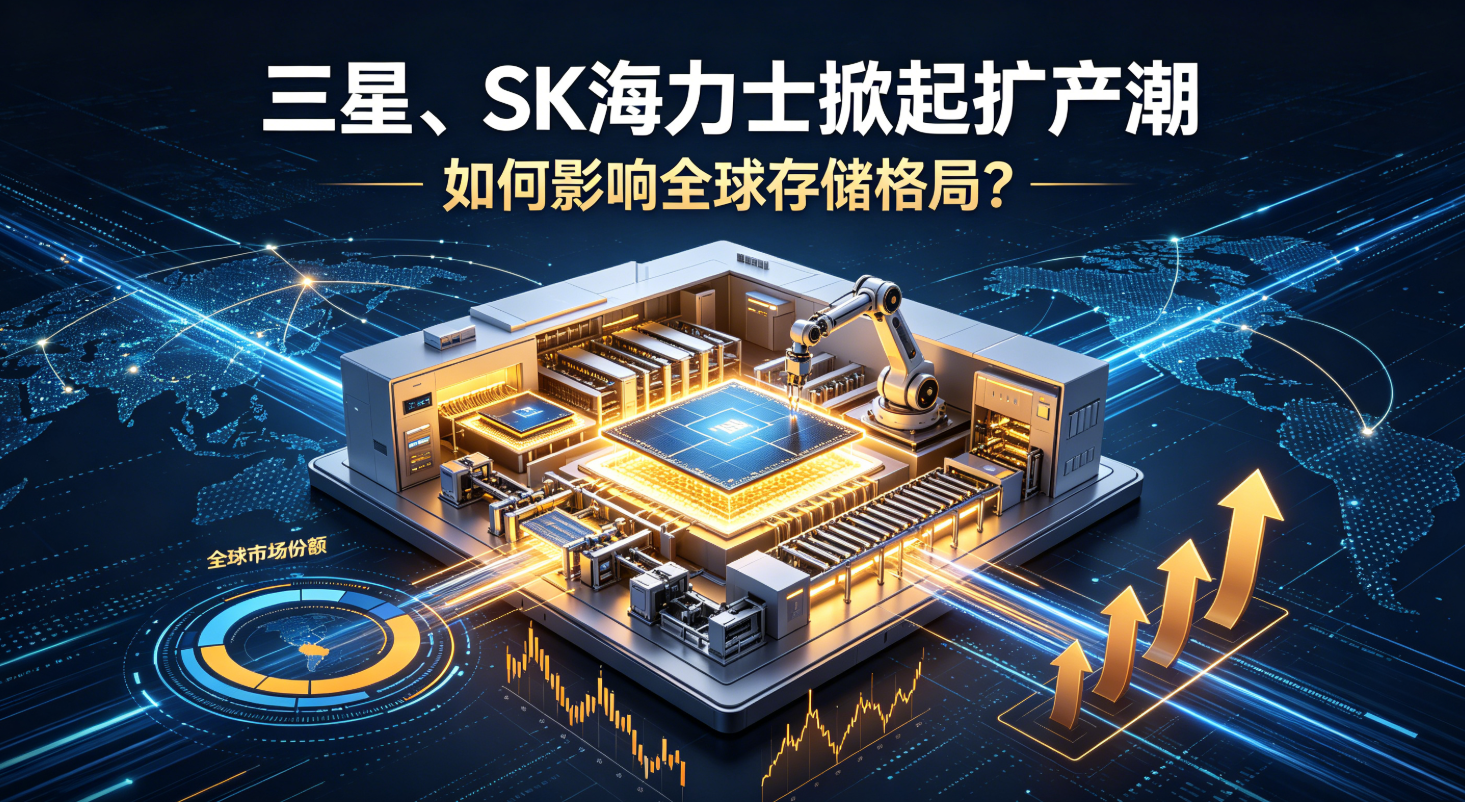
For companies such as Samsung and SK Hynix, the opportunity lies not only in volume growth but in technological differentiation. High-value memory solutions, particularly high-bandwidth memory (HBM), are now essential components in AI systems. This has shifted competitive advantage away from pure scale and toward innovation, integration, and yield management.
2. AI Is Reshaping Chip Demand
Artificial intelligence has become the single most powerful demand driver for the semiconductor sector. Training large language models and deploying AI inference systems require enormous computational capacity, which in turn increases demand for GPUs, specialized accelerators, advanced packaging, and high-performance memory. Unlike previous technology waves, AI creates demand across the full chip stack.
This trend is visible not only in the leading cloud platforms but also in enterprise and industrial applications. AI workloads require more servers, more network bandwidth, and more storage to support data-intensive processing. As a result, semiconductor demand is expanding beyond the traditional boundaries of consumer devices.
The market’s optimism is reflected in increasingly bullish forecasts for AI-related chip revenue. Financial institutions have estimated that the AI chip sector could add substantial value over the next five years, with some projections reaching into the trillion-dollar range.
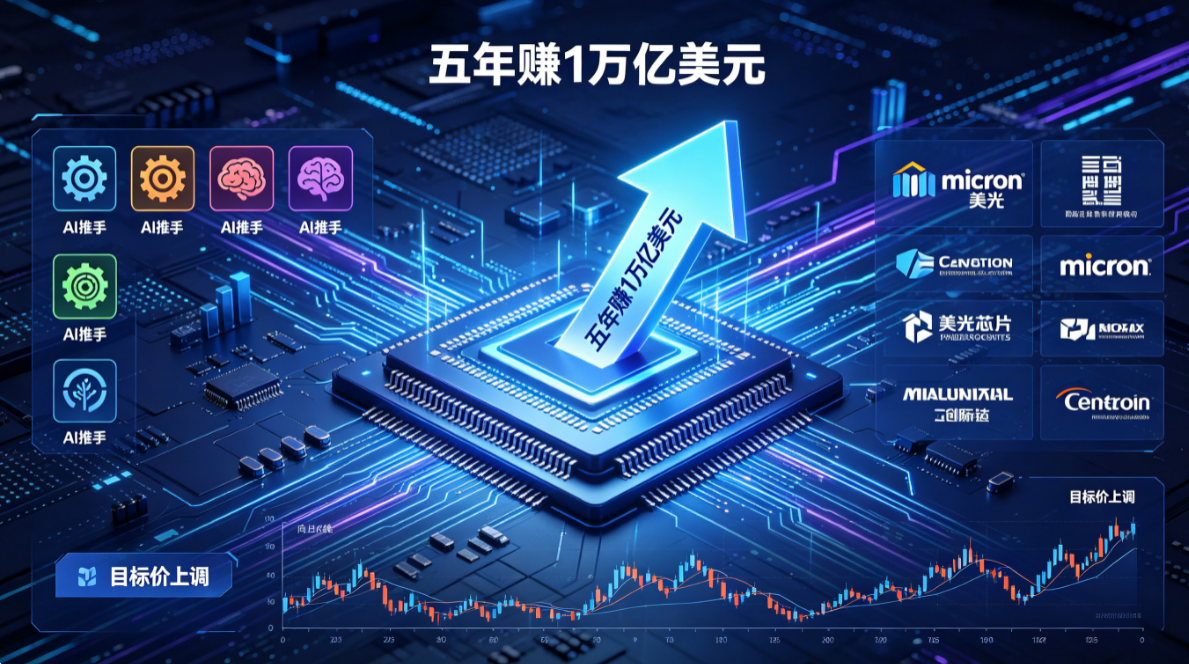
These forecasts are significant for several reasons. First, they highlight the scale of capital being directed toward AI infrastructure. Second, they underscore the fact that semiconductor demand is increasingly linked to productivity investment rather than consumer sentiment alone. Third, they suggest that chipmakers with exposure to memory, advanced packaging, and AI accelerators may enjoy stronger pricing power and more durable earnings growth.
3. Memory Chips: From Commodity to Strategic Asset
For many years, memory chips were viewed as highly cyclical commodities, vulnerable to oversupply and price collapses. That perception is changing. While memory markets remain cyclical by nature, the emergence of AI has elevated the strategic importance of memory products. HBM, in particular, has become one of the most critical enabling technologies in AI computing.
HBM stacks multiple DRAM dies vertically to increase bandwidth and efficiency. This architecture allows data to move more quickly between memory and processors, which is essential for AI training and inference. As the complexity of models increases, the demand for faster and more energy-efficient memory rises as well. This has allowed leading suppliers to command better margins than in prior cycles.
At the same time, NAND and enterprise storage solutions are gaining relevance through data center expansion. The volume of data generated by AI systems, cloud applications, and digital services requires massive storage capacity. That is why investment in storage market expansion is no longer just about consumer devices; it is increasingly about the backbone of digital infrastructure.
A key implication of this trend is that memory manufacturers may benefit from a more favorable industry structure. If supply discipline holds and demand continues to rise, the sector could experience a period of improved profitability. However, the risk remains that rapid capacity additions may eventually soften pricing, especially if end-market growth slows.
4. Supply Chains, Geopolitics, and Industrial Policy
Semiconductors are not only a business story; they are also a geopolitical one. Governments around the world have recognized that chip production is central to national competitiveness, industrial security, and technological leadership. This has led to large-scale policy interventions, including subsidies, tax incentives, and domestic manufacturing initiatives.
The global semiconductor supply chain remains highly concentrated in several critical areas: advanced logic manufacturing, equipment, materials, and packaging. This concentration creates vulnerability. Natural disasters, trade disputes, or export controls can disrupt production and delay shipments across the entire ecosystem. As a result, companies are diversifying suppliers and regionalizing certain parts of their operations.
At the same time, strategic competition is reshaping where new fabs are built and how technology is transferred. The push for supply chain resilience may improve long-term stability, but it also raises costs. Building new fabrication plants requires billions of dollars and years of execution. For this reason, industry leaders must carefully balance resilience with efficiency.
Advanced packaging has become especially important in this context. As chip scaling becomes more difficult and expensive, performance gains increasingly depend on system-level integration rather than transistor shrinking alone. This creates new opportunities for equipment providers, substrate suppliers, and foundry partners that can support complex heterogeneous integration.
5. Investment Outlook: Opportunity with Discipline
For investors and industry observers, the semiconductor sector presents both opportunity and caution. On one hand, AI, cloud computing, and digital infrastructure point to a powerful medium-term growth story. On the other hand, semiconductor markets have historically been volatile, and periods of optimism can quickly give way to corrections if supply expands too quickly or macroeconomic conditions weaken.
The most attractive areas appear to be those aligned with structural demand rather than purely consumer-driven replacement cycles. These include:
- AI accelerators and related compute hardware
- HBM and other high-performance memory products
- Advanced packaging and interconnect technologies
- Data center storage and networking components
- Equipment and materials that support next-generation manufacturing
Companies positioned in these segments may enjoy stronger pricing, better utilization, and more resilient order visibility. However, execution remains crucial. Technological leadership alone is not enough if yield, supply planning, or capital allocation are poor.
A disciplined approach is also necessary because the semiconductor industry requires enormous upfront investment. New capacity takes time to ramp, and returns depend on sustained demand. As a result, the best long-term performers are often those that combine innovation with operational excellence and prudent balance-sheet management.
Conclusion
The semiconductor industry is entering a decisive new era. What once revolved primarily around consumer electronics and cyclical memory swings is now being driven by AI infrastructure, data-centric computing, and strategic supply chain realignment. This shift is creating new winners and redefining the basis of competition across the sector.
Memory chips are moving from commodity status toward strategic importance. AI is expanding the addressable market for nearly every major chip category. Governments are reinforcing domestic capacity and supply resilience. Together, these forces are producing a semiconductor landscape that is more complex, more capital-intensive, and more consequential than ever before.
In this environment, the central question is no longer whether semiconductors matter. They do. The real question is which companies can translate technological capability into sustainable market leadership. The answer will likely determine the next decade of growth across the global digital economy.