Semiconductors: The Strategic Core of the Digital Economy
Keywords: semiconductors, chip supply chain, advanced manufacturing, geopolitical competition, technological sovereignty, Japan, industrial policy, AI hardware, global trade
Introduction
Semiconductors are no longer simply components hidden inside smartphones, laptops, or vehicles. They have become the foundational infrastructure of the digital age, powering everything from artificial intelligence and cloud computing to defense systems, industrial automation, and next-generation communications. In practical terms, the semiconductor industry now sits at the intersection of economics, national security, and technological leadership.
The strategic importance of semiconductors has grown dramatically in recent years. Global disruptions, export controls, rising geopolitical tensions, and the accelerating demand for high-performance computing have exposed the fragility of the chip ecosystem. At the same time, governments and corporations are investing unprecedented resources to secure supply chains, build domestic manufacturing capacity, and gain an edge in advanced node technologies.

This transformation is particularly visible in East Asia, where semiconductor production, equipment, materials, and downstream electronics manufacturing are deeply concentrated. Japan, South Korea, Taiwan, and increasingly Southeast Asia all play critical roles in the global chip network. The industry’s evolution therefore cannot be understood only through the lens of technology; it must also be viewed through the broader context of industrial strategy and geopolitical competition.
The Semiconductor Industry as the Backbone of Modern Civilization
At a technical level, semiconductors are materials whose electrical conductivity can be precisely controlled. This simple property has enabled the creation of transistors, integrated circuits, microprocessors, memory chips, sensors, and power devices that underpin modern life. The trajectory from early silicon devices to today’s extreme ultraviolet lithography and sub-5-nanometer fabrication has been one of relentless miniaturization, performance improvement, and cost efficiency.
The economic implications are immense. A single advanced chip can contain tens of billions of transistors and coordinate complex computation at extraordinary speed. Without semiconductors, modern digital systems would not exist in their current form. Artificial intelligence, autonomous driving, digital payments, smart factories, and high-speed wireless communication all depend on reliable access to increasingly sophisticated chips.
What makes semiconductors unique among industrial products is their dual nature. They are commercial goods sold into consumer and enterprise markets, but they are also strategic assets. The same fabrication capabilities that enable faster smartphones also support military radar systems, secure communications, satellites, and advanced weapons platforms. This dual-use characteristic elevates semiconductors from a conventional manufacturing sector to a central pillar of state power.
A Highly Specialized and Fragile Supply Chain
The semiconductor supply chain is among the most complex industrial systems ever created. It spans raw materials, design software, intellectual property, wafer fabrication, lithography equipment, packaging, testing, and final assembly. Each stage requires specialized expertise, massive capital investment, and coordination across multiple countries.
No single nation dominates the entire chain. The United States leads in chip design software, core intellectual property, and advanced semiconductor equipment. Taiwan remains the global center for cutting-edge foundry production. South Korea is a powerhouse in memory chips and advanced manufacturing. Japan is indispensable in materials, photoresists, precision tools, and several critical components. Europe, especially the Netherlands, plays a decisive role in lithography machinery. China is making aggressive investments to reduce dependence on foreign suppliers, while Southeast Asian countries are expanding packaging and testing capabilities.
This dispersion creates efficiency, but it also creates vulnerability. A natural disaster, pandemic, energy shortage, shipping disruption, or trade restriction in one region can affect the entire system. The semiconductor shortage during the post-pandemic recovery period revealed how quickly bottlenecks can spread from one segment to the entire global economy. Automakers halted production, consumer electronics prices rose, and governments realized that chips were no longer a background input but a strategic bottleneck.
The current supply chain structure also reflects decades of optimization around cost and scale rather than resilience. As geopolitical tensions intensify, firms are increasingly forced to balance efficiency against redundancy, a shift that will likely raise costs but improve long-term stability.
Japan’s Semiconductor Ambition and Industrial Renewal
Japan occupies a particularly important position in the semiconductor landscape. Although it lost global dominance in chip manufacturing decades ago, it remains essential in materials, equipment, and precision engineering. Japanese companies supply key inputs such as photoresists, silicon wafers, chemicals, and manufacturing tools that are difficult to substitute. This gives Japan substantial strategic leverage even without leading in the most advanced logic fabrication.
Japan’s recent industrial policy reflects a broader effort to restore technological capacity and secure economic resilience. The country has encouraged major investments in domestic chip production, supported joint ventures with foreign firms, and strengthened partnerships aimed at building a more secure regional supply network. These measures are not simply about regaining prestige; they are about ensuring access to critical technologies in an era of strategic rivalry.
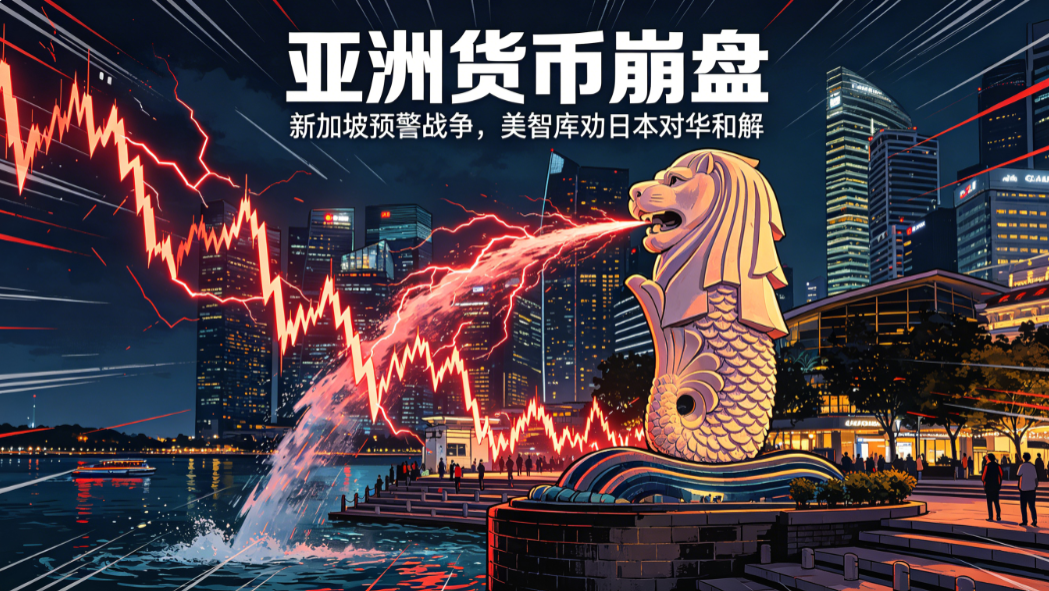
The image above reflects a broader warning: semiconductor competition is no longer confined to factory floors and research laboratories. It affects currencies, trade balances, capital flows, and investor confidence. Countries that fail to secure access to chips may face not only industrial weaknesses but also macroeconomic pressure. For Japan, semiconductor revitalization is tied to national competitiveness, export stability, and long-term relevance in a changing Asian order.
Japan’s strengths lie in quality control, process discipline, materials science, and industrial collaboration. Its challenge is scale. In the era of massive capital expenditures and rapid innovation cycles, no single domestic player can easily compete alone. The future of Japan’s semiconductor strategy will likely depend on selective specialization, international partnerships, and the ability to integrate upstream materials with downstream design and manufacturing ecosystems.
Geopolitics and the New Semiconductor Order
Semiconductors have become one of the most visible instruments of geopolitical competition. Export controls, investment screening, industrial subsidies, and alliance-based supply chain planning have transformed chips into a central topic in diplomacy and national security planning. The industry is now shaped by a new logic: access to technology is power, and control over bottlenecks is leverage.
The United States has focused on limiting the transfer of advanced chipmaking capabilities that could be used to strengthen strategic competitors. At the same time, it has supported domestic fab construction and encouraged allies to align industrial policy with security objectives. China, in response, has accelerated efforts to localize production, expand indigenous design capabilities, and reduce dependence on foreign tools and materials. Europe and Japan are both pursuing resilience-oriented policies to avoid overreliance on any single external supplier.
This emerging order has several implications. First, the era of purely market-driven semiconductor globalization is ending. Second, industrial policy is returning as a major force in advanced manufacturing. Third, alliances are becoming as important as commercial contracts. Nations and firms must now assess not only cost and performance but also political risk, regulatory exposure, and strategic trust.
The result is a more fragmented but potentially more secure ecosystem. Over time, we may see multiple regional semiconductor hubs rather than a single globally optimized chain. This shift will likely increase duplication and raise expenses, but it may also reduce systemic fragility and provide greater technological autonomy for key economies.
Artificial Intelligence Is Reshaping Chip Demand
Among the most powerful forces transforming the semiconductor industry is the rise of artificial intelligence. Training large AI models requires enormous computational capacity, which in turn depends on advanced GPUs, high-bandwidth memory, interconnect technologies, and sophisticated data center infrastructure. AI demand is not merely increasing the volume of chip consumption; it is changing the definition of high-value silicon.
The implications are profound. Companies that design chips for AI workloads are now among the most valuable in the world. Foundries capable of producing advanced logic at scale enjoy unprecedented bargaining power. Memory manufacturers benefit from the need for faster, denser, and more efficient storage. Meanwhile, demand for power semiconductors, cooling systems, and packaging solutions is also rising as AI deployments expand.
This AI-driven cycle is reinforcing the strategic value of leading-edge fabs and design ecosystems. The competition is no longer only about making chips smaller. It is about making them faster, more energy-efficient, and better suited to specialized workloads. In this environment, innovation across architecture, materials, and manufacturing processes becomes as important as lithographic scaling itself.
Energy, Sustainability, and the Cost of Advanced Manufacturing
Semiconductor fabrication is extraordinarily resource-intensive. Modern fabs require large amounts of electricity, ultra-pure water, specialized chemicals, and stringent environmental controls. As nodes become more advanced, the complexity of maintaining yield and precision rises sharply. This creates a tension between performance and sustainability that the industry must address carefully.
Energy security has become a major concern, especially in regions where industrial policy is encouraging new fab construction. If chip manufacturing is to expand in a durable way, governments and companies must consider the availability of stable power supplies, water infrastructure, and low-carbon production methods. The semiconductor industry cannot rely solely on technological ambition; it must also build operational resilience.
Environmental standards are likely to become a competitive differentiator. Fabs that can deliver high output with lower emissions and more efficient resource usage may gain advantages in markets where regulators and customers increasingly prioritize sustainability. In the long term, the success of semiconductor expansion will depend not just on capital and talent, but on the ability to integrate industrial growth with environmental responsibility.
The Investment Perspective: Risk, Resilience, and Long-Term Value
For investors, semiconductors represent both opportunity and volatility. The industry offers exposure to some of the most powerful structural trends in the global economy, including digitalization, AI adoption, electric vehicles, cloud computing, and advanced defense systems. However, it is also cyclical, capital intensive, and highly sensitive to trade policy, inventory adjustments, and geopolitical shocks.
A sound investment approach requires understanding where value is created in the chain. Design firms may generate high margins through intellectual property and platform dominance. Foundries may benefit from scale and technological leadership. Equipment makers and materials suppliers often enjoy strong pricing power because their products are difficult to replace. Packaging and testing firms may become increasingly important as chip architectures grow more complex.
Investors must also recognize that semiconductor strength is not distributed evenly across all regions. Some economies are better positioned to capture long-term value because they control critical chokepoints such as lithography, specialty chemicals, precision fabrication tools, or advanced packaging. Others may remain dependent on external suppliers despite heavy domestic spending. The winners will be those who combine capital allocation with strategic clarity.
Conclusion
Semiconductors are the invisible engine of the modern world, but their importance is now fully visible in global markets, industrial policy, and geopolitical strategy. They power the digital economy, enable next-generation technologies, and shape the balance of power between nations. Their supply chain is highly specialized, globally distributed, and increasingly contested.
Japan’s role illustrates the industry’s complexity: even without dominating end-product manufacturing, it remains indispensable through materials, equipment, and engineering excellence. At the same time, the broader Asian context shows how deeply semiconductors are tied to currency stability, trade resilience, and strategic autonomy. The industry is no longer just about chips; it is about national capability.
As artificial intelligence accelerates demand and geopolitical competition intensifies, the semiconductor sector will remain at the center of global attention. The countries and companies that succeed will be those that understand a simple but crucial truth: in the twenty-first century, control over semiconductors is control over the foundations of economic and technological power.