Weaving on the Chain, Lighting Underground: How a Proposal Illuminates the City's "Lifeline"
As the city's above-ground parts grow at a visible speed, the buried water supply, drainage, gas, and power pipelines often become forgotten corners. They are the city's "lifelines," yet they have long suffered from the hidden pain of data silos, unclear responsibilities, and delayed updates. During the 2025 Shanghai Two Sessions, Proposal No. 0498, collectively submitted by the Science and Technology Association, attempts to use blockchain, this cutting-edge digital technology, to draw a credible, traceable, and continuously updated "digital health report" for this deeply buried "lifeline."
Motivation: When the "Lifeline" Bears Unbearable Pain
The proposal's origin stems from an "accident." In the summer of 2024, Wang Yi, a member of the Municipal Political Consultative Conference, witnessed a construction site near Jiazhou Road where mud water gushed out due to accidental water pipe excavation, causing traffic paralysis for several hours. The contractor's statement, "Each pipeline is managed by its own department, no one can see clearly what others are doing," revealed the deep dilemma—Shanghai's 170,000 kilometers of underground pipelines, eight categories of "lifelines," are disturbed on average every few minutes. Behind each accidental excavation lies the interruption of residents' lives, the cost of massive repairs, and a dead knot in urban governance.
Subsequent visits confirmed Wang Yi's judgment. The call for data sharing is growing louder, but the concern of "once data leaves the door, who guarantees its security" is equally heavy. Ambiguous confidentiality boundaries, delayed map updates, and difficulty in synchronizing completion data into databases have created "invisible bottlenecks." The research team wrote a line in their notebooks: "Data doesn't leave the door, life doesn't enter the window." This sentence became the starting point of the entire proposal.
Research: Finding the Key to "Consensus"
The traditional approach always wants to move data from A to B, inevitably triggering disputes over ownership and security. Blockchain's characteristics—distributed certification, immutability, privacy encryption, and hierarchical authorization—directly address the core demands of pipeline governance: data available but invisible, clear ownership traceable, and complete traceability for evidence. After visiting water, electricity, gas, and communication enterprises, as well as departments such as housing, planning resources, and big data, the research team found that the core issue is not too little data, but "too much that no one dares to use, no one can use, or no one knows how to use." The water supply department needs to query gas pipelines to avoid construction interference but should not touch the privacy data of gas users; regulatory departments can view the entire network's operation in real-time without handling raw data. What blockchain needs to do is lay a "trust network" that is physically separate but logically unified.
Refinement: Using Technology to Resolve "Invisible Bottlenecks"
With the direction set, the Science and Technology Association quickly transformed the blueprint into a proposal, proposing three core suggestions: First, taking the opportunity of the establishment of the Municipal Data Bureau, build a blockchain-based underground pipeline data sharing platform and research the establishment of sharing exchange and operation mechanisms; Second, explore smart contracts and privacy computing technologies, open data resources to social demand parties through security mechanisms, and form a new model of data sharing "between enterprises, between government and enterprises, and between governments"; Third, combine IoT, sensing technology, and artificial intelligence to achieve real-time dynamic monitoring of important pipelines, gradually establish a health monitoring system, and ensure data is timely and accurate. The proposal also provides a clear roadmap—select high-sensitivity areas for pilot projects first, establish an incentive mechanism of "who contributes data, who shares benefits," and move the concept of "data doesn't move, models do" from idea to operation. Data is no longer an asset无偿ly taken but is securely exchanged through smart contracts, applying for an unforgable "digital ID" for every inch of pipeline.
Implementation: A Continuously Updated City "Digital Health Report"
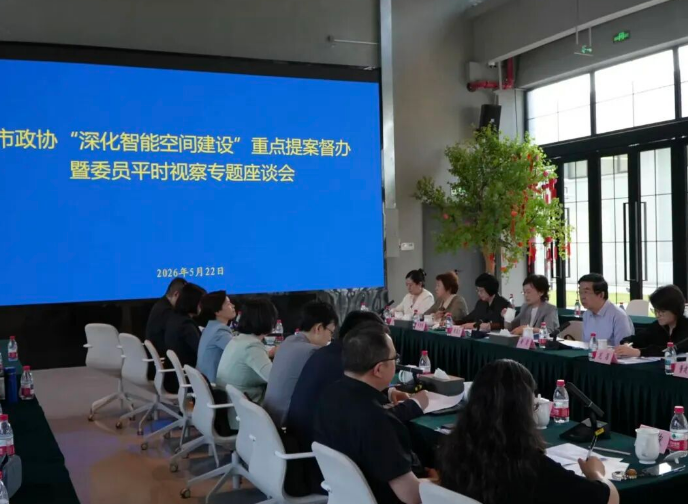
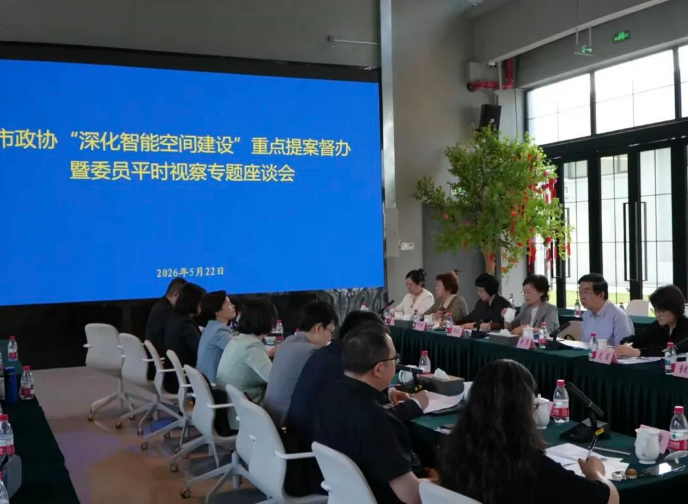
The proposal was jointly undertaken by the Municipal Housing and Construction Commission, Planning and Resources Bureau, and Big Data Bureau, with all core suggestions adopted and rated as an excellent proposal of the Municipal Political Consultative Conference for 2025. At the implementation meeting, relevant departments frankly acknowledged the shortcomings of the current mechanism, clearly stated that blockchain technology will be embedded in the construction of the underground pipeline comprehensive management information platform, accelerate the formulation of detailed rules for data confidentiality and sharing, and坚持试点先行、逐步推开 (insist on pilot projects first and gradually expand). In less than a year, the municipal government has successively introduced multiple measures and initiated forward-looking layouts such as the Quantum City on Fuxing Island, moving "blockchain + data governance" from consensus to action.
From underground pain points to on-chain solutions, this proposal is a microcosm of technology for good truly implemented in the细微处 (subtle aspects) of the city. It starts from the expectations of ordinary citizens on the streets, originates from the practical difficulties of frontline practitioners, and relies on the industrial advantages of Shanghai's digital infrastructure. Urban governance needs embroidery needles, but more importantly, it needs web weavers. When every pipeline and every valve becomes an immutable node on the blockchain, the city possesses a continuously updated digital health report—underground pipelines move from "vague governance" to "precise intelligent management," and from "each going its own way" to "on-chain consensus." This is not a distant technological vision but a new paradigm of urban governance that Shanghai is writing.